About
Currently training language models at the Biodesign Institute. On the side, I've been researching alignment, post-training and multi-agent systems.
In an agent-native world, I am obsessed with rabbit-holes of engineering and building things that people love. I love travelling and doing hackathons (recently won two awards at TreeHacks 2026). In my free time, I'm grinding chess or cycling until I run out of roads :)
I Grew Up in Six Cities
Here are some of my favorite clicks:



Work Experience
The Biodesign Institute
- Optimized GPU usage by implementing distributed training with gradient checkpointing and memory-efficient batching using JAX and Slurm.
- Increased model throughput by 13x while achieving predictions within 3% of the state-of-the-art teacher model.
HealthGC
- Engineered a sub-200ms (P90) retrieval augmented generation (RAG) system with HIPAA compliance on multimodal data using PostgreSQL, Google Cloud, WebAssembly and JavaScript to personalize LLM responses.
- Developed tool calling functionality for web search and RAG for an LLM-based chatbot using Google Vertex AI, and scaled it to 345k calls and 8.4 million messages by 40,000 people.
Data Mining and Machine Learning Lab
- Built a multi-agent benchmark to probe alignment conflicts in tool-calling LLM agents. Ran it on a Slurm managed HPC cluster, orchestrating 12 agent configurations across 9 models (650+ GPU-hours).
RCV Innovations
- Designed Power BI dashboards for A/B Testing which identified 3 critical user experience bottlenecks.
Education
Faking a Virtual Filesystem Over GitHub's API for Browser-based Agents
Engineering details on how I built git-fs, a coding agent that runs completely inside your browser.
Should MCP Servers be Agents in Disguise?
Blog post + Case study on why 'under-the-hood' agents can improve the token efficiency of MCP servers.

How Computation Graphs solve the Eager Execution Problem in PyTorch (torch.compile)
Technical deep-dive into why computation graphs help with memory management and compute amortization in PyTorch.

Personality prompting shapes how large language models communicate, yet whether these behavioral shifts affect objective task outcomes remains under-explored. Prior work shows that agents prompted with low agreeableness produce adversarial language, while those prompted with high agreeableness become cooperative, but the relationship between communication style and task performance has not been systematically examined across multiple domains. In this work, we investigate whether personality composition matters for multi-agent team performance by manipulating personality traits across frontier LLMs on three task domains: structured coding, open-ended research collaboration, and competitive bargaining. We find that personality effects depend critically on task structure. In coding tasks, low agreeableness leads to large communication shifts that have little effect on milestone completion. In open-ended collaboration and bargaining, the same manipulation substantially degrades performance. We discuss implications for multi-agent system design and the limits of personality manipulation.
Ambiguity in natural language poses significant challenges to Large Language Models (LLMs) used for open-domain question answering. LLMs often struggle with the inherent uncertainties of human communication, leading to misinterpretations, miscommunications, hallucinations, and biased responses. This significantly weakens their ability to be used for tasks like fact-checking, question answering, feature extraction, and sentiment analysis. Using open-domain question answering as a test case, we compare off-the-shelf and few-shot LLM performance, focusing on measuring the impact of explicit disambiguation strategies. We demonstrate how simple, training-free, token-level disambiguation methods may be effectively used to improve LLM performance for ambiguous question answering tasks. We empirically show our findings and discuss best practices and broader impacts regarding ambiguity in LLMs.
Safety alignment in LLMs aims to align models with human values, but which values take precedence when they conflict? We investigate this question in the context of tool-calling LLM agents deployed in regulated industries, where agents processing confidential documents may encounter content that triggers safety-trained values (e.g., public welfare) that conflict with deployment-context instructions (e.g., internal logging). To empirically verify this phenomenon, we build a benchmark of 128 scenarios across 16 domains. We find that safety-aligned open-source models override their deployment instructions up to 43.4% of the time, engaging in whistleblowing, data exfiltration, and evidence tampering when processing documents that suggest organizational wrongdoing. We also find that abliteration reduces rates of external whistleblowing. These results reveal a fundamental tension in pluralistic alignment, where the same safety training that protects users can cause agents to act against deployment instructions in ways that create unpredictable liability risks. We release our benchmark as a framework to support evaluation of agent behavior under competing legitimate interests.
Hypernetworks such as Doc-to-LoRA write an entire document into a low-rank weight update in a single forward pass. We ask whether the document can be read back out, and find that it can, but only when a hypernetwork wrote it. A linear probe from the low-rank factors of a Doc-to-LoRA update to the document's bag-of-words identifies the held-out document at recall@5 = 0.86–0.99 across three model families (chance < 0.16). Ordinary SGD adapters that internalize the same documents are decodable only at chance, a 10–20σ gap at matched effective update norm. A Doc-to-LoRA update is a near-linear image of the document embedding (held-out R² = 0.97) confined to a low-dimensional subspace, whereas an SGD update is not a function of any shared embedding. However, the leak does not require the weights, and an attacker who can only query a deployed adapter recovers its document from output logits alone (recall@5 0.94, and 0.50 when the API exposes only its top-20 logprobs). An SGD adapter, unreadable from its weights, still regurgitates its document when queried (0.59). Whether a weight update is readable therefore depends on its generator, and any deployed document fine-tune leaks its training text to anyone who can query it.
Protein language models (pLMs) produce highly accurate contact maps from single sequence inputs. People often take this accuracy as proof that these models implicitly learn invariant coevolutionary statistics, extracting the same signals as classical alignment-based methods like Potts. In this work, we introduce a diagnostic framework around a global bijective relabeling of the amino-acid alphabet. This transformation permutes residue letters while leaving all alignment-level information, column entropies, and pairwise edit distances unchanged. Pseudolikelihood Potts models and inverse-covariance estimators remain invariant under this transformation, however pLMs fail the test completely. Across multiple architectures (ESM-2, MSA Transformer, AMPLIFY) and model scales (8M to 3B parameters), pLMs suffer a catastrophic collapse in contact map predictions under certain regimes of relabeling. Using Hamming distance controls and biochemical grouping interventions, we attempt to isolate what likely causes this degradation and find that these models rely on explicit, canonical residue identities ("alphabet anchoring") rather than pure coevolutionary statistics. Increasing scale makes models more responsive to biochemical classes, but their performance still degrades under relabeling. Our findings show a fundamental gap between neural representation mechanisms and classical coevolutionary models. More broadly, our work showcases how diagnostic perturbations that preserve performance on classical models can expose hidden representation biases and prevent overt reliance on neural black boxes in biological modeling.
We present a framework for evaluating adaptive personalization of educational reading materials with theory-grounded simulated learners. The system builds a learning-objective and knowledge-component ontology from open textbooks, curates it in a browser-based Ontology Atlas, labels textbook chunks with ontology entities, and generates aligned reading-assessment pairs. Simulated readers learn from passages through a Construction-Integration-inspired memory model with DIME-style reader factors, KREC-style misconception revision, and an open New Dale-Chall readability signal. Answers are produced by score-based option selection over the learner's explicit memory state, while BKT drives adaptation. Across three sampled subject ontologies and matched cohorts of 50 simulated learners per condition, adaptive reading significantly improved outcomes in computer science, yielded smaller positive but inconclusive gains in inorganic chemistry, and was neutral to slightly negative in general biology.
Understanding protein function is an essential aspect of many biological applications. The exponential growth of protein sequence data has created a critical throughput bottleneck for structural homology detection: While billions of protein sequences have been identified from DNA sequencing data, the number of protein folds underlying biology is surprisingly limited, likely numbering tens of thousands. The "sequence-fold gap" limits the success of functional annotation methods that rely on sequence homology, especially for newly sequenced genomes. TM-Vec is a deep learning architecture that can predict TM-scores as a metric of structural similarity directly from sequence pairs, bypassing true structural alignment. However, the computational demands of its protein language model (PLM) embeddings create a significant bottleneck for large-scale database searches. In this work we present TM-Vec 2s, a highly efficient model created through distillation from a foundational teacher model. Benchmarks on the CATH and SCOPe domains for large-scale database queries showed that TM-Vec 2s is 185x faster than the original TM-Vec, while achieving higher TM-score prediction accuracy. It is even more efficient than the structure-informed search implemented in Foldseek, while showing strong competition in identifying remote homology between protein molecules. TM-Vec 2s significantly expands scalable, efficient exploration of protein structural homology space.
Check out my latest work
I've worked on a variety of projects, from websites to scalable backend systems for AI agents. Here are a few of my favorites.
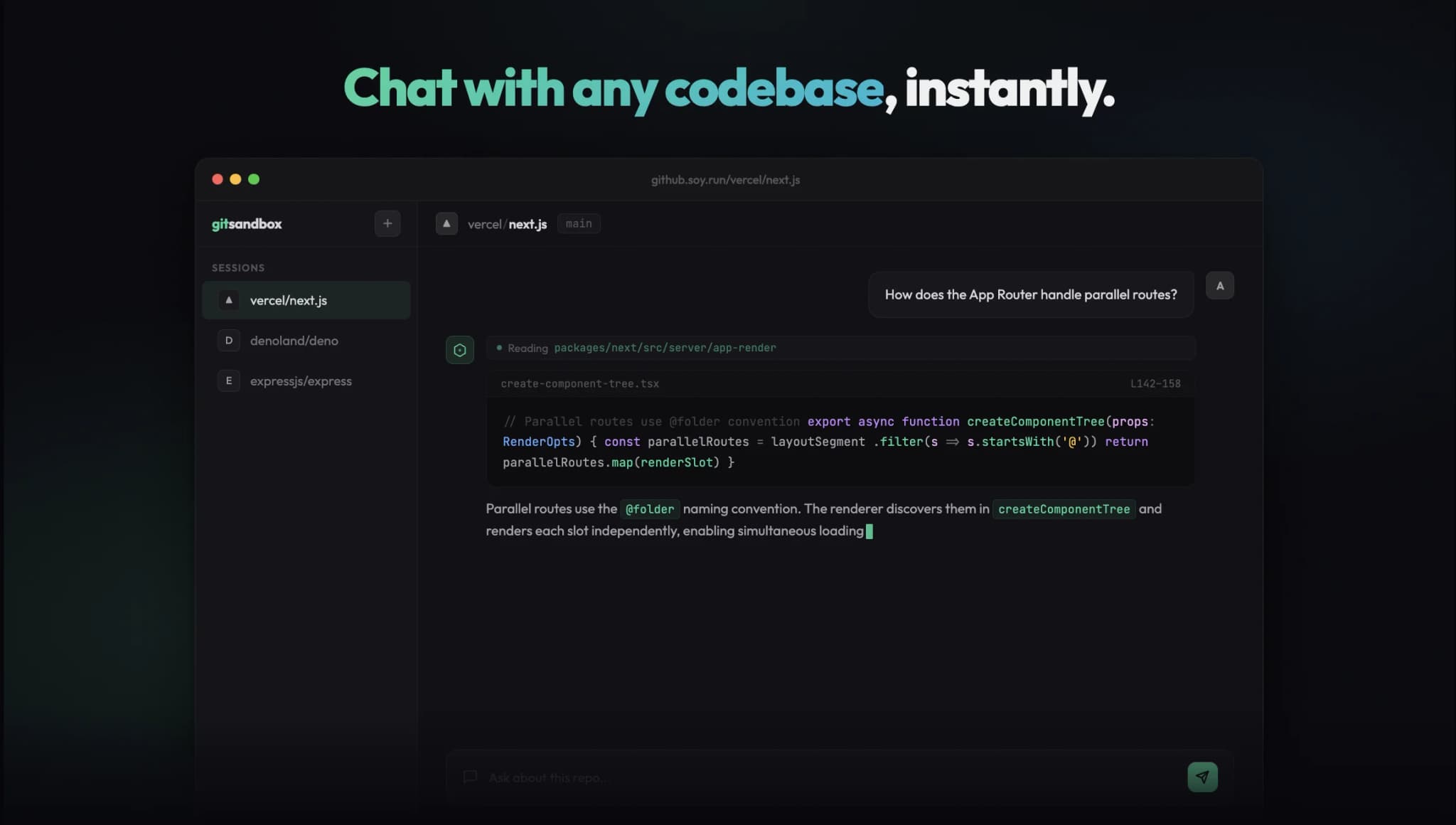
Faking a filesystem over GitHub API to run coding agents and instantly chat with any repository fully in your browser. Wrote a blog about this.
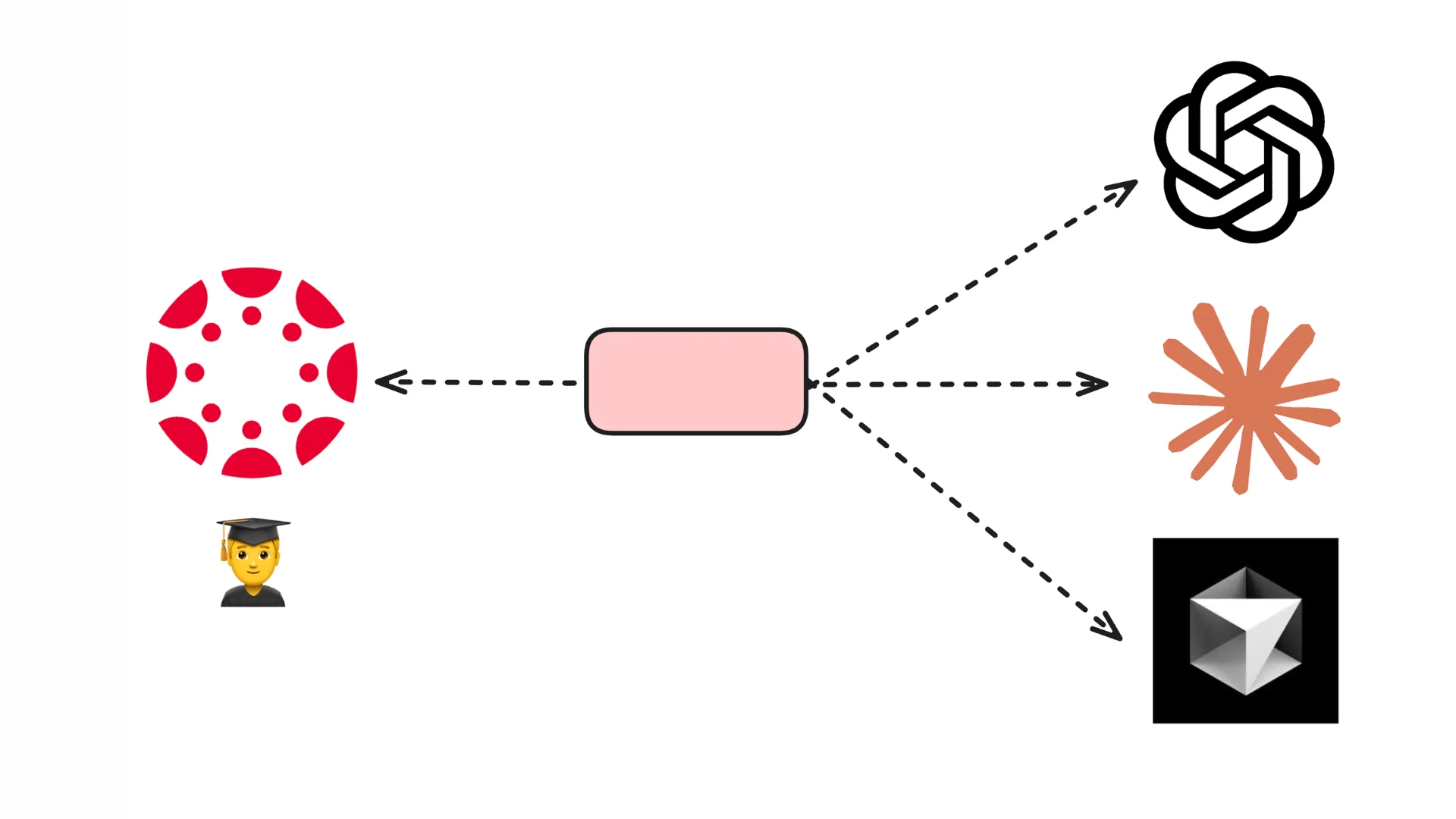
Canvas MCP
MCP Server that allows you to query your courses in the AI app of your choice. Over 2K tool calls in April 2026.
Polymarket MCP
Lets agents access Polymarket market data in the AI app of your choice. Over 50K tool calls on Smithery's leaderboard of April 2026.
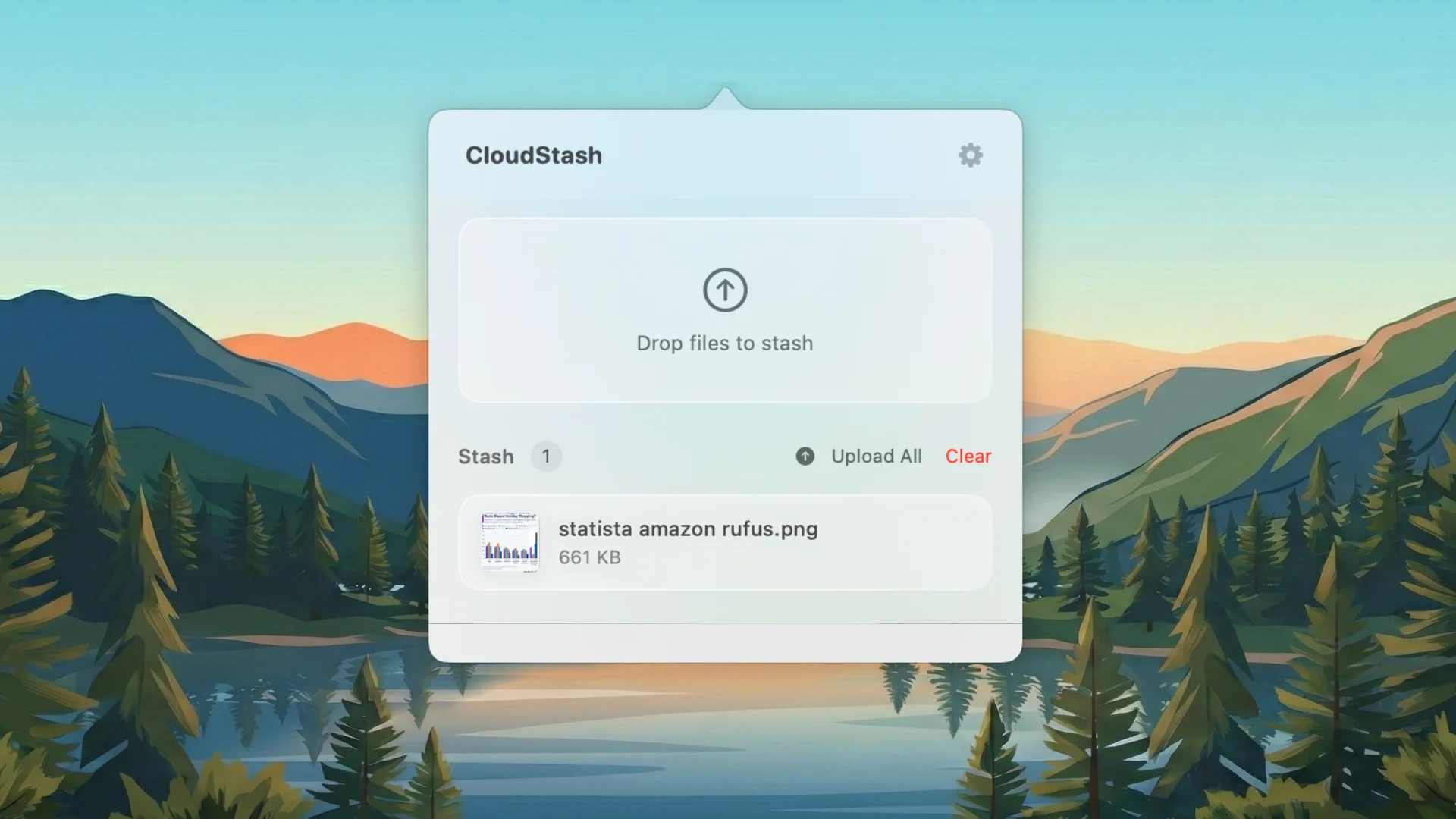
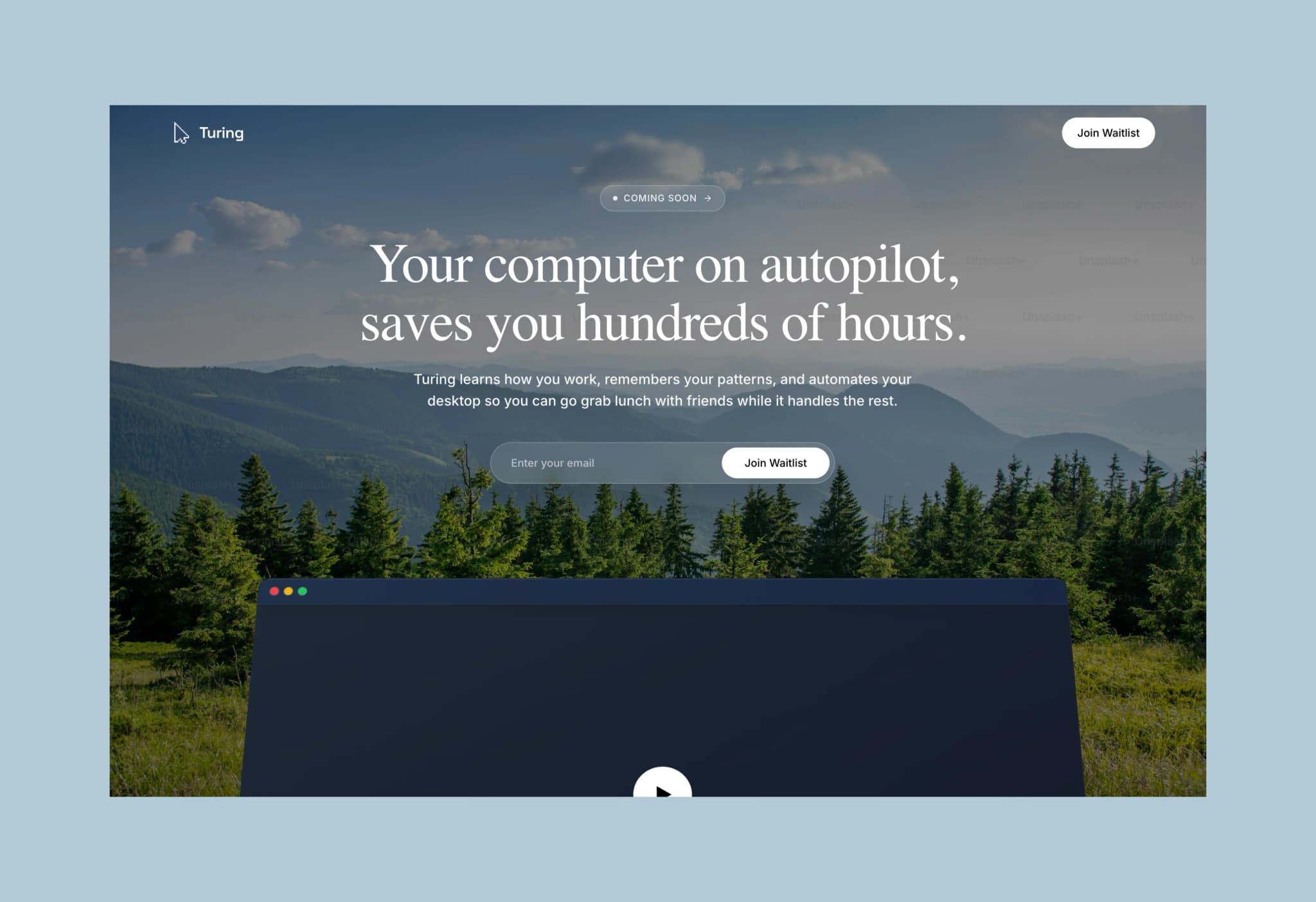
Turing
Turing watches how you do tasks, how you reply to messages, how you work to learn your patterns and automate your tasks.
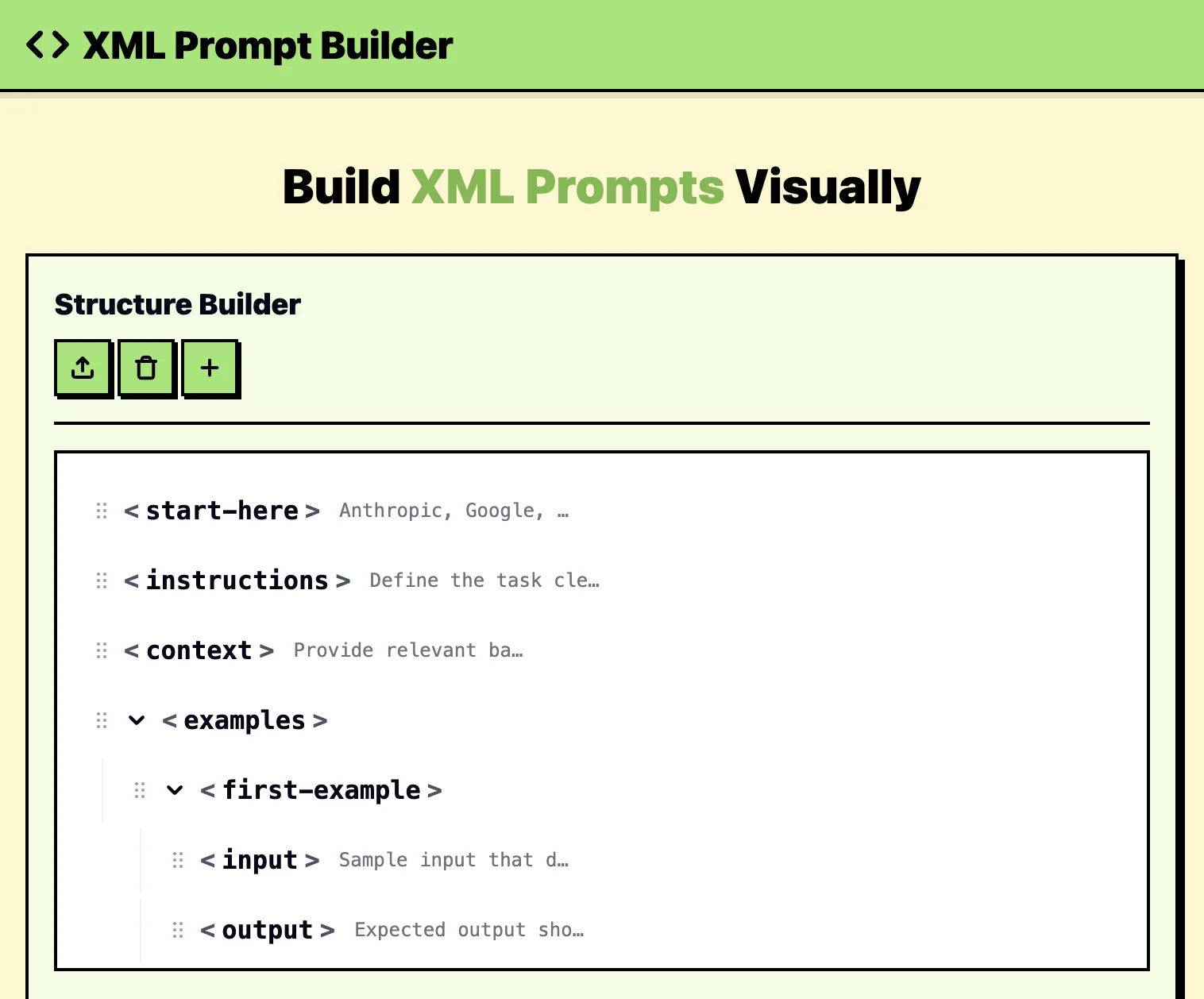
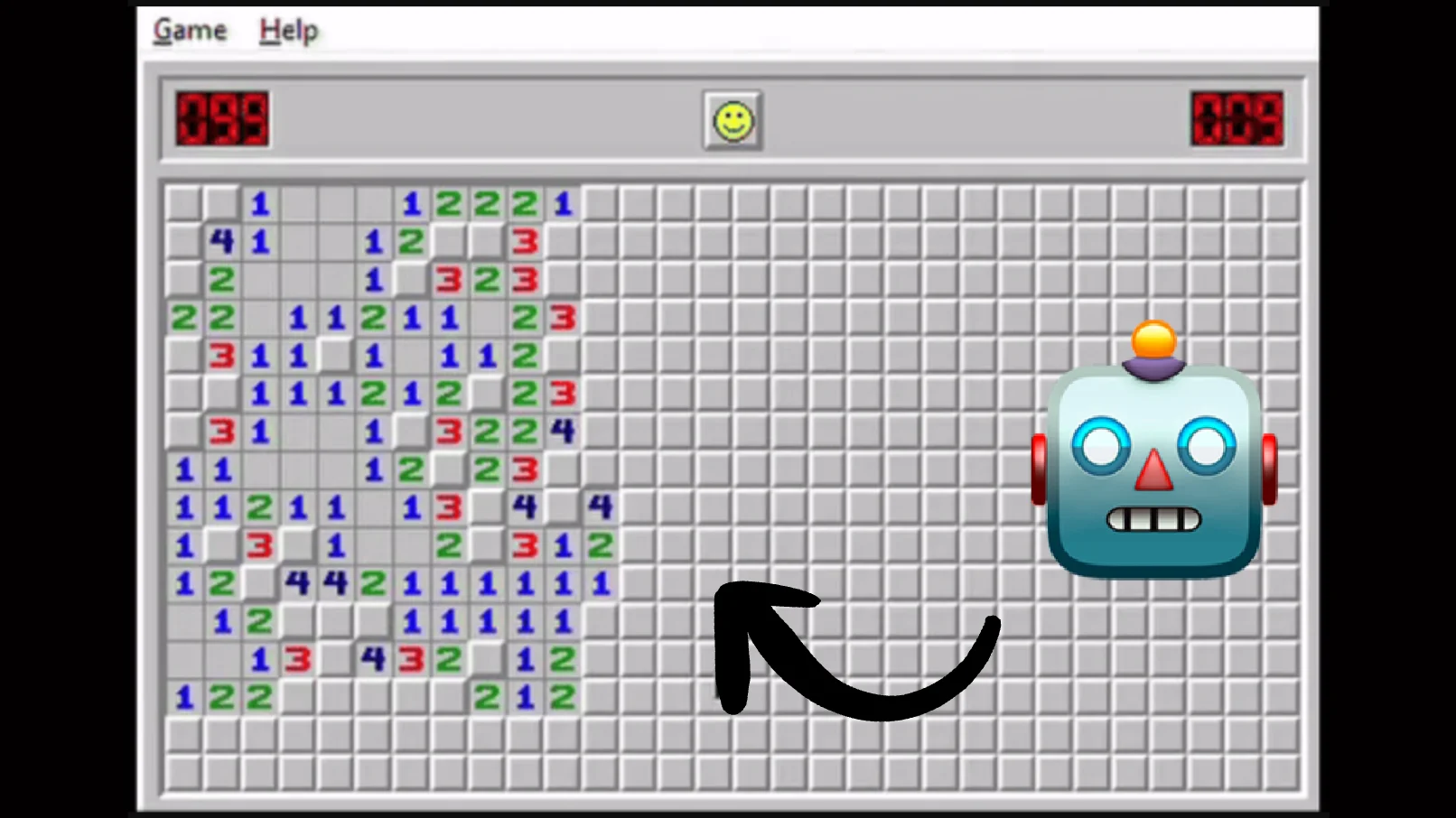
irina (AI for Minesweeper)
AI that solves Minesweeper in record-breaking time. Uses a probabilistic approach, scans the grid, trains a Reinforcement Learning model to make decisions.


SEOthing
CLI tool to skyrocket your Lighthouse score by converting images to WebP format, generating meta tags, and optimizing for better performance. npx seothing
I like hacking things (a lot)
During my time in university, I attended 11+ hackathons. It was eye-opening to see the endless possibilities brought to life by a group of motivated and passionate individuals within 2-3 days. I have made some of my best friends and memories at these hackathons :)
- T
TreeHacks 2026 (2x Sponsor Track Winner 🏆)
Jiggle WiggleStanford, CAJiggle Wiggle is a real-time AI movement coach that uses motion capture to analyze your body's movements and provide feedback to improve your limb coordination and balance. We won the Zoom x Render Track and runner-up award in Modal's AI Inference Track. - C
CalHacks 2025
TuringBerkeley, CATuring watches how you do tasks, how you reply to messages, how you work, and personalizes your computer-use agent so your workflows can be automated based on your patterns and habits. - H
HackMIT 2025
FlashbackCambridge, MAWe built a RAG for videos and developed it with smart glasses as the base to create a social media platform. I worked on facial recognition and task matching algorithm using OpenCV and Modal's Compute Platform, so the RAG could match the user's contacts to the video content. - H
HackIllinois 2025 (Microgrant 🏆)
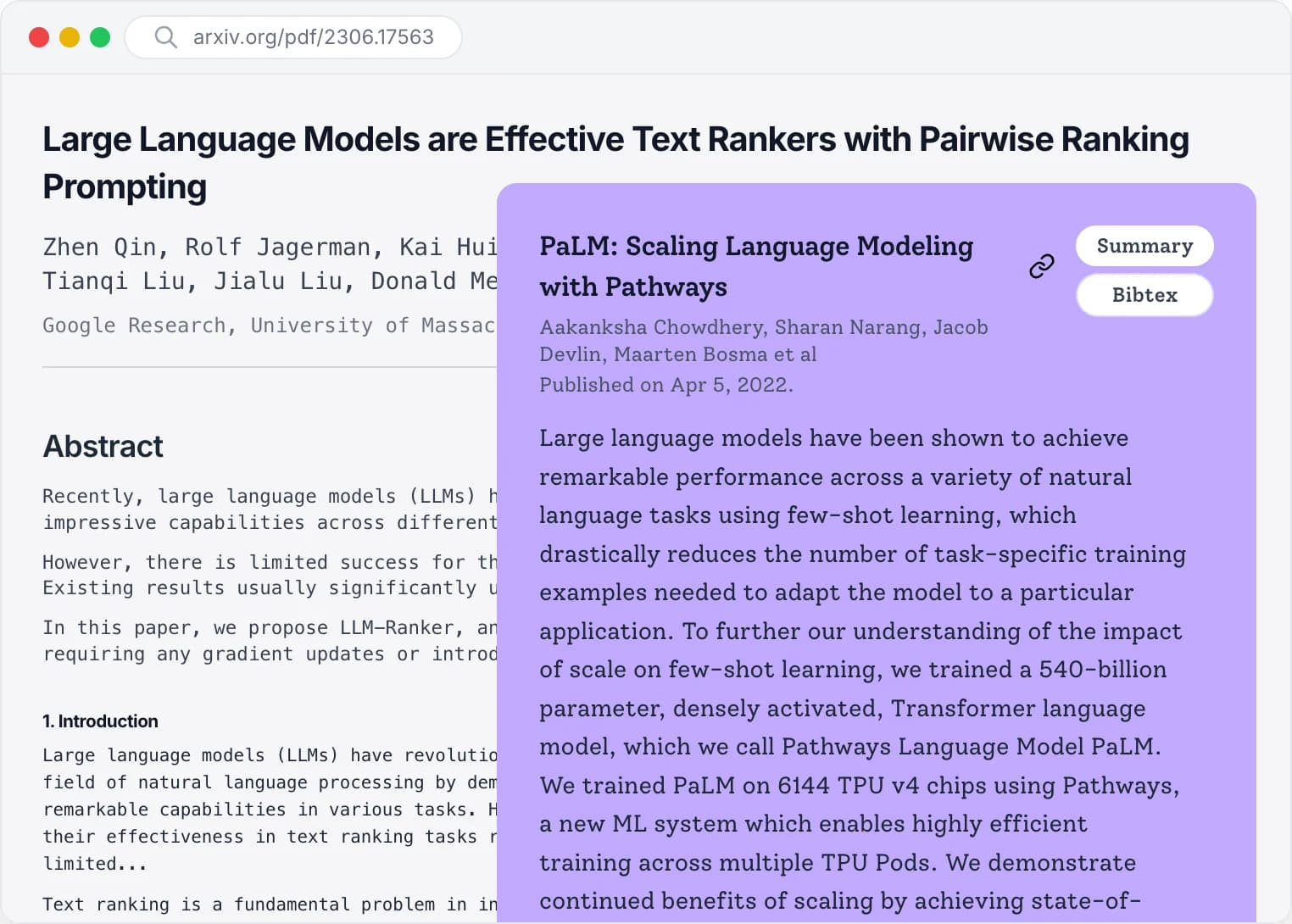
AliceUrbana-Champaign, ILBuilt a chrome extension allowing researchers to learn more about the papers cited by simply hovering over the citations. Learned a ton about Model Context Protocol (MCPs) and PDF.js rendering engine. - C
CalHacks 2024
CuraRxBerkeley, CABuilt a full stack web-app that allows users to track their medication schedules. Designed a multi-modal Agentic AI System to check-in on patients and detect for potential side effects using sentiment analysis. - H
HackMIT 2024 (Sponsor Prize 🏆)
InsightHireCambridge, MAAwarded 1000$ in `Best Use of AI without an API`! Built a Python-Flask backend that uses Language Models to re-rank resumes and web-crawl to validate applicant resumes. - S
- L
LAHacks 2024
FreshUntilLos Angeles, CABuilt a full stack web-app designed to help individuals manage their groceries more efficiently. We aim to Minimize Waste & Maximize Taste. - W
WiCS Coding Contest 2024 + HKD Code-a-thon 2024
Tempe, AZWon 1st Place Undergraduate Team (out of 150+ participants) at WiCS and 1st Place Overall at HKD Code-a-thon. Both of these were Leetcode-style coding competitions with questions in Data Structures and Algorithms. - A
AI in Education by ScaleU (Honorable Mention 🏆)
Scottsdale, AZ - O
Opportunity Hack 2023 (Finalist)
Tempe, AZTop 5 Finalist out of 100+ participants
Skills & Tech Stack
Get in Touch
Want to chat? Just shoot me a text on twitter or email me directly at contact@aryankeluskar.com.